
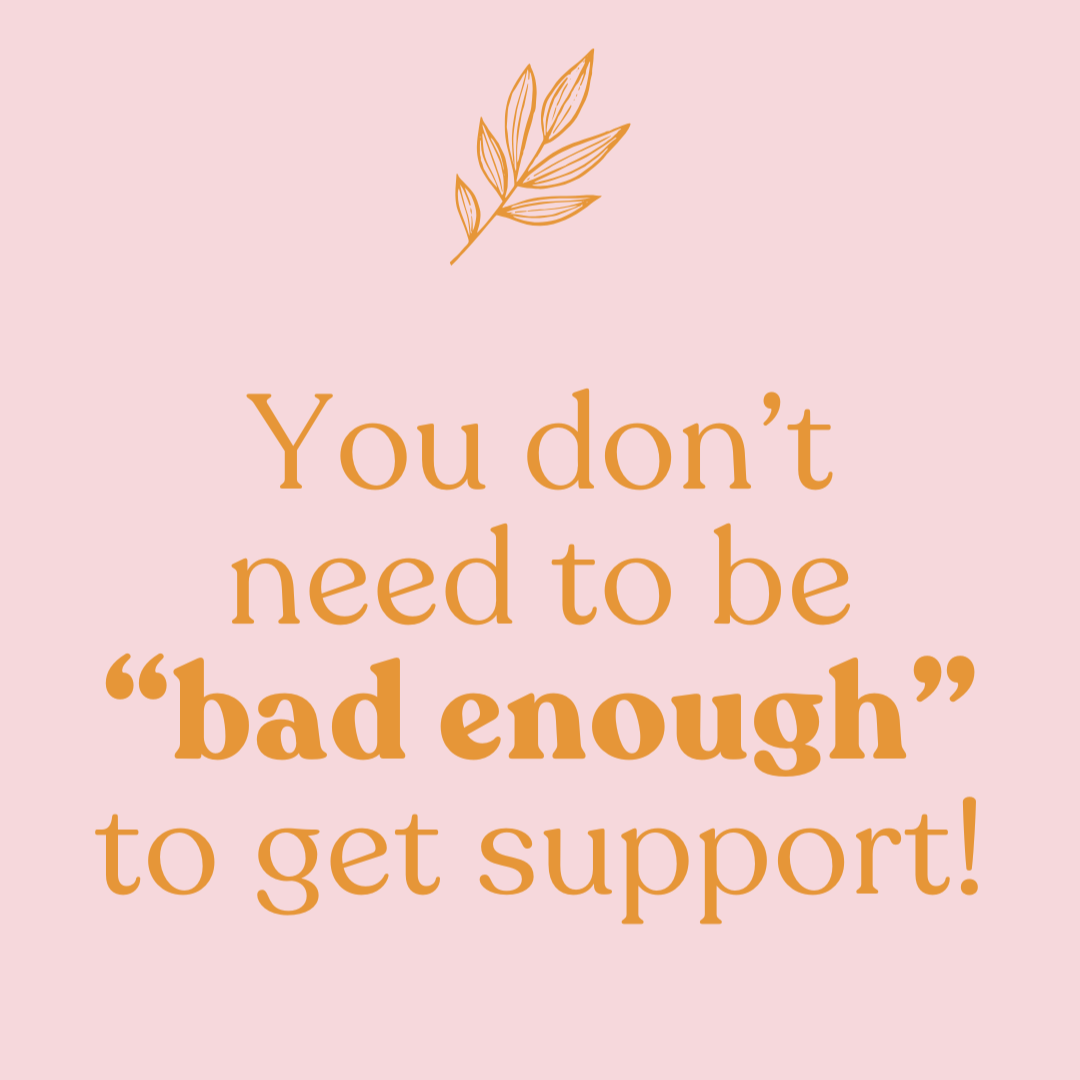
You Don’t Need to Be “Bad Enough” to Get Support
There’s something I see often in clinic, and it’s not a specific condition or lab marker.
It’s people waiting.
Waiting until symptoms are worse. Waiting until they’re “really struggling”. Waiting until they feel like they can justify asking for help.
Somewhere along the way, many of us have absorbed the idea that support is only appropriate when things are severe enough, messy enough, or broken enough. That we should cope quietly until we reach some invisible threshold that proves we truly need it.
But that simply isn’t true.
You don’t need to hit rock bottom to deserve support.
Where This Idea Comes From
Often it sounds like this:
“It’s not that bad yet.”
“Other people have it worse.”
“I should be able to manage this myself.”
“I’ll just try one more thing first.”
These thoughts feel reasonable in the moment. Responsible, even. But over time, they keep people stuck in a cycle of waiting and pushing through.
Months pass. Sometimes years.
Symptoms become more ingrained. Energy drops. Stress builds quietly in the background.
Not because someone didn’t care, but because they believed they hadn’t earned the right to ask for help yet.
Support Isn’t a Last Resort
In my clinic, support doesn’t begin at crisis point.
It can start when your energy feels a little off, when your cycle has changed and you’re unsure why, when your skin is flaring and you can’t pinpoint the trigger, or when your sleep isn’t as restorative as it used to be.
Sometimes it starts simply because you don’t feel like yourself.
Early support often means gentler intervention. It means we can work with the body before patterns become more entrenched. It means you don’t have to white-knuckle your way through something alone.
You’re Allowed to Ask Earlier
You don’t need a diagnosis.
You don’t need dramatic blood results.
You don’t need to be completely exhausted.
If something feels off, that’s enough.
If you want clarity, that’s enough.
If you simply want to feel better supported in your health, that’s enough.
What Early Support Often Looks Like
Sometimes it’s as simple as reviewing blood results through an optimal lens, adjusting nutrition to better support hormones or energy, or regulating sleep and stress patterns before they become more entrenched. It might involve addressing inflammation early, or creating a realistic and sustainable plan that feels manageable rather than overwhelming.
Small shifts, made earlier, often prevent the need for bigger interventions later.
Health Doesn’t Have to Be Reactive
We live in a system that is very good at managing disease.
But there is so much value in supporting health before disease develops.
You don’t need to be “bad enough”.
You’re allowed to choose proactive care.
You’re allowed to choose understanding.
You’re allowed to choose support before things fall apart.
And often, that’s where the most sustainable change happens.
If you’ve been putting off reaching out because you feel like you should cope a little longer, this is your reminder ~ you don’t have to.
Support can start wherever you are.
